Holidays to Monaco
Top destinations in Monaco

Monte Carlo
From sports cars to towering hotels and glamorous megayachts, this Côte d'Azur gem has long been a touchstone for luxury. Experience a slice of the high life in Monte Carlo.
Monaco: fast facts
| Language | French |
|---|---|
| Currency | Euro (€) |
| Time zone | UTC+1 (CET) and UTC+2 (CEST) |
Monaco holiday highlights
Follow in royal footsteps
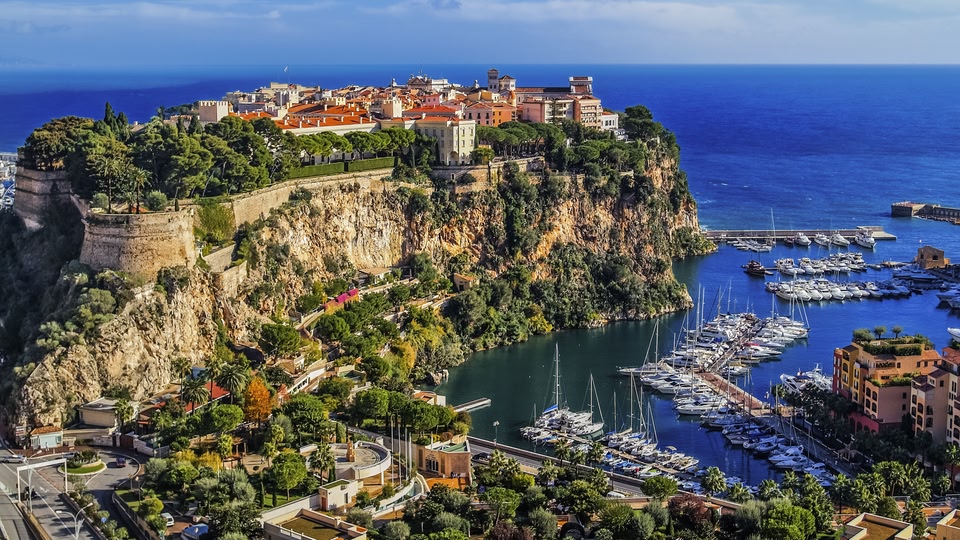
Monaco’s royal history literally dominates the landscape — the Prince’s Palace sits on the monolithic Rock of Monaco. Visit the Renaissance-style state apartments, or watch the daily Changing of the Guard in the square outside. You’ll find Prince Rainier III and Princess Grace’s graves in the nearby Roman-Byzantine cathedral. And you can visit the Princess Grace Irish Library to see her personal book collection.
Join the high rollers
You don’t have to break the bank to enjoy the Casino de Monte-Carlo. Visiting its lavish marble-and-gold rooms is one of the best things to do in Monaco. They’re open every morning before the blackjack, poker and roulette games begin. Or catch a performance in its miniature opera house, the Salle Garnier. Respectful attire is encouraged, and smart attire is required for gaming.
Admire the supercars
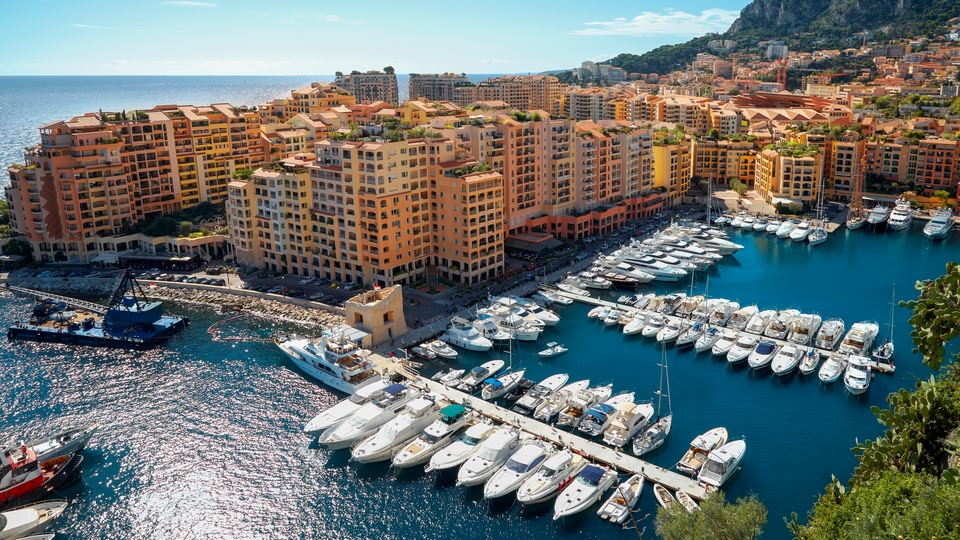
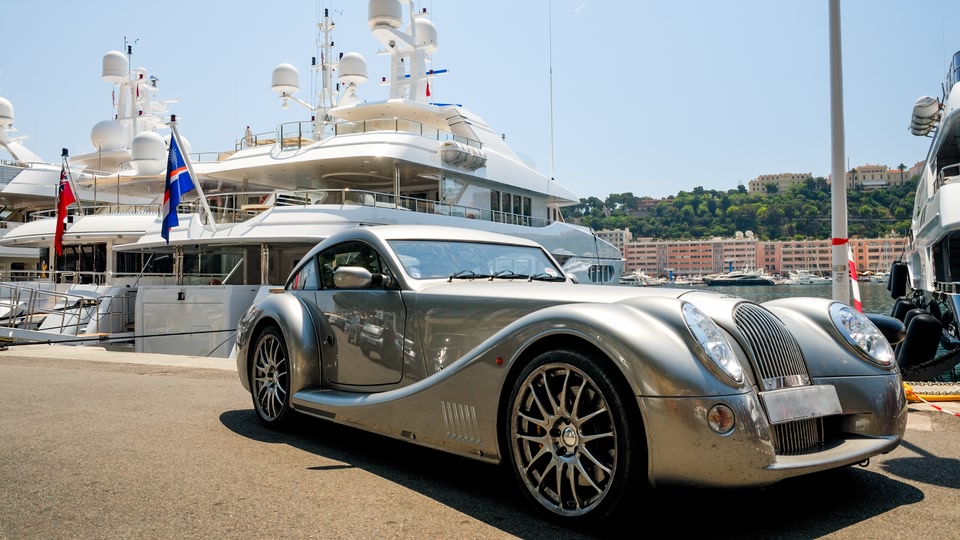
Monaco’s wealth is on display everywhere. You don’t need to stand in the Place du Casino long to get an eyeful of Ferraris and Maseratis. Head to Port Hercule to marvel at the Car Collection of HSH the Prince of Monaco — or count the super yachts from one of the waterfront bars. The grandest arrive in September for the annual Monaco Yacht Show.
Things to do in Monaco
Top attractions
In Monaco’s oldest neighbourhood, the Prince’s Palace is a stunning medieval fortress that looms over the city like a castle in the sky. The Casino de Monte-Carlo is just as iconic — it inspired a James Bond novel, after all. And the starting grid of Monaco’s world-famous Grand Prix is clearly marked at Port Hercules, a yacht-watcher’s paradise.
Beaches
Most beaches in Monaco are private, but Larvotto, a 15-minute walk from Monte Carlo, is free. The man-made beach has fine gravel rather than sand, so be sure to take a towel and sandals. There’s also an open-air, heated seawater pool at Stade Nautique Rainier III. For more beach options, cross the French border to Cap d'Ail.
Nature
Among Monaco’s elegant public gardens, the two dedicated to Princess Grace are spectacular. They include the peaceful Jardin Japonais and a rose garden with over 300 varieties. The Jardin Exotique is home to over 1,000 species of cacti and other succulents. And you can see sharks and tropical fish at the Musée Océanographique. Its aquarium cares for 450 species, including injured turtles.
Culture and museums
The performing arts are woven into Monaco’s social life, especially at eye-catching venues like the Salle Garnier. You’ll also find fascinating art museums in Monaco. The Nouveau Musée National de Monaco hosts contemporary exhibitions in one of the country’s last Belle Époque villas. And the Musée de la Chapelle de la Visitation houses its collection of Old Masters in a 17th-century chapel.
Cuisine
The high-end restaurants in Monaco are places to see and be seen. For cheaper eats and local dishes, try Marché de La Condamine, where the fresh produce is as brightly coloured as the flowers. Among its stalls and arcades, you’ll find Monégasque treats like ‘socca’, a crispy chickpea crepe and tasty ‘barbajuans’ (ricotta fritters).
Family friendly
Don’t miss the impressive mammoth skeleton at the Museum of Prehistoric Anthropology, where you’ll find hands-on exhibits and a nearby botanical garden. Stade Louis II, home of AS Monaco Football Club, offers guided stadium tours and hosts other year-round events. Or perfect your mini-golf game at Parc Princesse Antoinette, which also boasts playgrounds, sports pitches and a miniature farm.
Find the best time to visit Monaco
Weather in Monaco
March – May: Spring is the time to enjoy Monaco’s parks in full bloom, from Jardins Saint-Martin and Sainte-Barbe to Fontvieille Park.
June – August: With 300 days of sunshine a year and a Mediterranean breeze, Monaco’s summers stay pleasant, with highs around 30°C. In August, the sea warms to 23°C — perfect for a dip while mingling with high society at Monte-Carlo Beach.
September – November: Early autumn stays balmy, with water warm enough to swim in until October. Get your cloak ready — as the cooler weather arrives, so does opera season.
December – February: Winter brings some rain and temperatures that drop to 10°C in January. Explore Monaco’s quirkier indoor charms, like the Museum of Stamps and Coins.
Events in Monaco
F1 Monaco Grand Prix (May or June): From hairpin bend to curving tunnel, Monaco is motorsport’s most iconic street circuit. The Grand Prix, which dates back to 1929, attracts a glamorous crowd, and the parties on race weekend go long into the night.
Monaco Art en Ciel (July and August): The sky over Monaco becomes one big canvas for this annual fireworks competition. Grab a spot in Quai Albert Ier to see colourful displays from international artists light up the summer night. Vote for your favourite in the public prize.
Monte-Carlo Jazz Festival (November and December): This relatively new two-week music fest at the Opéra Garnier attracts some of the greatest names in jazz.
Know before you go
Local etiquette
Monaco favours formal dress, so skip the swimwear unless you’re at the beach, and always wear a shirt and shoes. Speak respectfully about the royal family, and avoid snapping photos of strangers. Discretion is valued here, and paparazzi are even banned by law. Visitors who blend in are welcomed warmly.
Health and safety
The hospitals in Monaco offer excellent care, but it’s a good idea to have travel insurance. Be careful when swimming. Smaller beaches may not have lifeguards on patrol, and the sea can get rough. For peace of mind, Larvotto Beach has a jellyfish net and a first-aid station on hand if needed.
LGBTQ+ travel
Monaco’s conservative laws have not caught up to those of its neighbour, France. However, though same-sex couples can’t marry here, the general attitude is welcoming to queer travellers. You likely won’t encounter discrimination, but there’s also not much of a dedicated LGBTQ+ scene. Your best bet is to hop over the border to nearby Nice.
Budget
For a cheap holiday in Monaco, hunt down affordable eats in unexpected places, like the sports club overlooking the harbour, where you can get an inexpensive meal for around 25 euros (€). Time your visit to the waterfront bars for happy hour, and ride the public bus for €2.
Getting around Monaco
Public transportation
Buses: There’s only one train station in Monaco, but there are seven bus routes, including special night services. An on-demand shuttle, ClicBus, serves districts like Plati, Les Fleurs and L’Annonciade, which aren’t covered by the regular routes.
Boats: You can use the solar-powered water bus that operates between the Old Town and the casino for a short hop across the harbour. Or stay on it for its entire hour-long loop — a ticket costs no more than a regular bus. Private services run tours and charters up and down the coast.
Domestic flights
Monaco doesn’t have its own airport — the nearest is in Nice, 22 kilometres away. But it does have a heliport. The helicopter service to Nice airport leaves every 15 minutes. Or you can book yourself a sightseeing flight for an aerial view of the Rock of Monaco.
Driving
F1 fans may be keen to drive the Monte Carlo streets, but most visitors are better off leaving their vehicle in one of the underground car parks and getting around on foot. Taxis will take you door to door, and Monaco’s electric bicycle share service, Monabike, offers great value.


